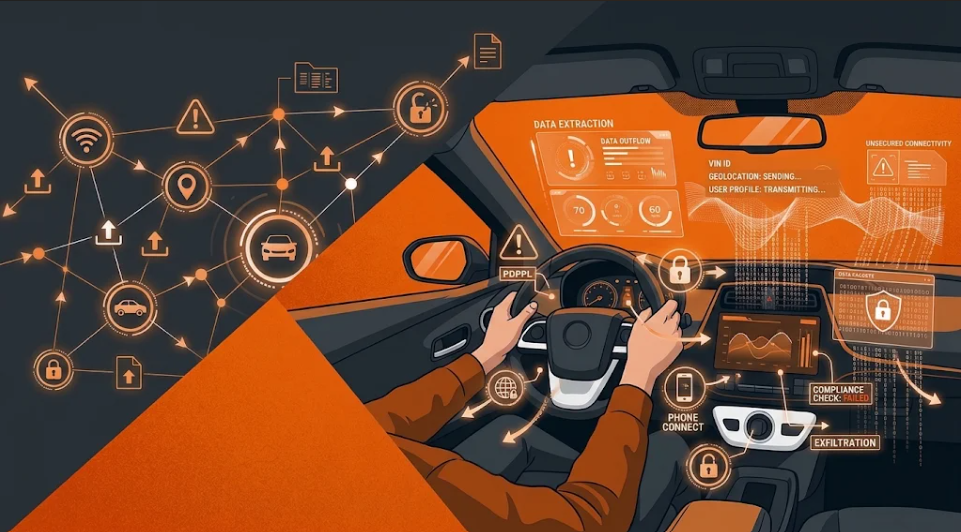
Modern connected vehicles are essentially smartphones on wheels. Yet in Qatar, their data collection practices remain largely unexamined (statement is purely based on writer’s visibility, knowledge and search).
While we enjoy the convenience of smart dashboards and companion apps, these vehicles are continuously harvesting sensitive personal data including Vehicle Identification Numbers (VINs), email addresses, and real-time geolocation and transmitting it back to manufacturers and third parties.
Even when autonomous driving features are legally disabled on Qatari roads, the underlying connectivity infrastructure remains active. Without rigorous auditing, these vehicles risk violating Qatar’s Personal Data Privacy Protection Law (PDPPL) and exposing drivers to critical cybersecurity threats.
This is not merely a theoretical risk; global regulators are already cracking down on major automakers for abusing driver data:
Empirical research published in Oct. 2026 "Automatic Transmission: An Empirical Study of Data Privacy in the Connected Vehicle Ecosystem," revealed that connected vehicles and their companion apps routinely transmit user data to major third-party tech ecosystems, including Amazon, Google, Meta, and Microsoft.
Enforcement actions in the U.S. highlight the scale of the problem: General Motors recently agreed to pay US $220 million to settle allegations brought by 36 state attorneys general that it illegally sold consumers’ driving behavior and location data to data brokers (who then resold it to insurance companies) following a related settlement finalized with the U.S. Federal Trade Commission (FTC) earlier in the year.
In my upcoming research paper currently in peer-review "Autonomous Vehicle Cybersecurity Governance and the Sovereignty Gap for Importing States" we examine the broader national security implications of this blind spot. Beyond everyday data privacy breaches, unmonitored connected vehicles create a "sovereignty gap" for vehicle-importing nations. Introducing severe vulnerabilities that could be exploited for catastrophic cyberattacks or nation-state-sponsored threats.
What needs to happen next in Qatar:
Mandatory Data & Privacy Audits: Every connected vehicle and companion mobile application entering the local market must undergo technical testing to verify what data is collected, how it is stored and which third parties receive it.
PDPPL Compliance Enforcement: Automakers and local dealerships must be held accountable to ensure collected and cross-border data transfers comply with Qatar’s data protection regulations.
Proactive Regulatory Oversight: Key national bodies, including the Ministry of Transport (MoT) and the National Cyber Security Agency (NCSA), should establish clear cybersecurity and data governance frameworks for connected mobility.
As Qatar accelerates its smart mobility and digital transformation goals, consumer convenience cannot come at the expense of personal privacy and national cyber resilience.
How confident are you in the data privacy of the vehicle you drive today?
#ConnectedVehicles #Cybersecurity #DataPrivacy #Qatar #PDPPL #AutonomousVehicles #AutomotiveCybersecurity #SmartMobility #NationalSecurity #NCSA #MoTQatar #DigitalSovereignty